

Can weight loss lower blood pressure?
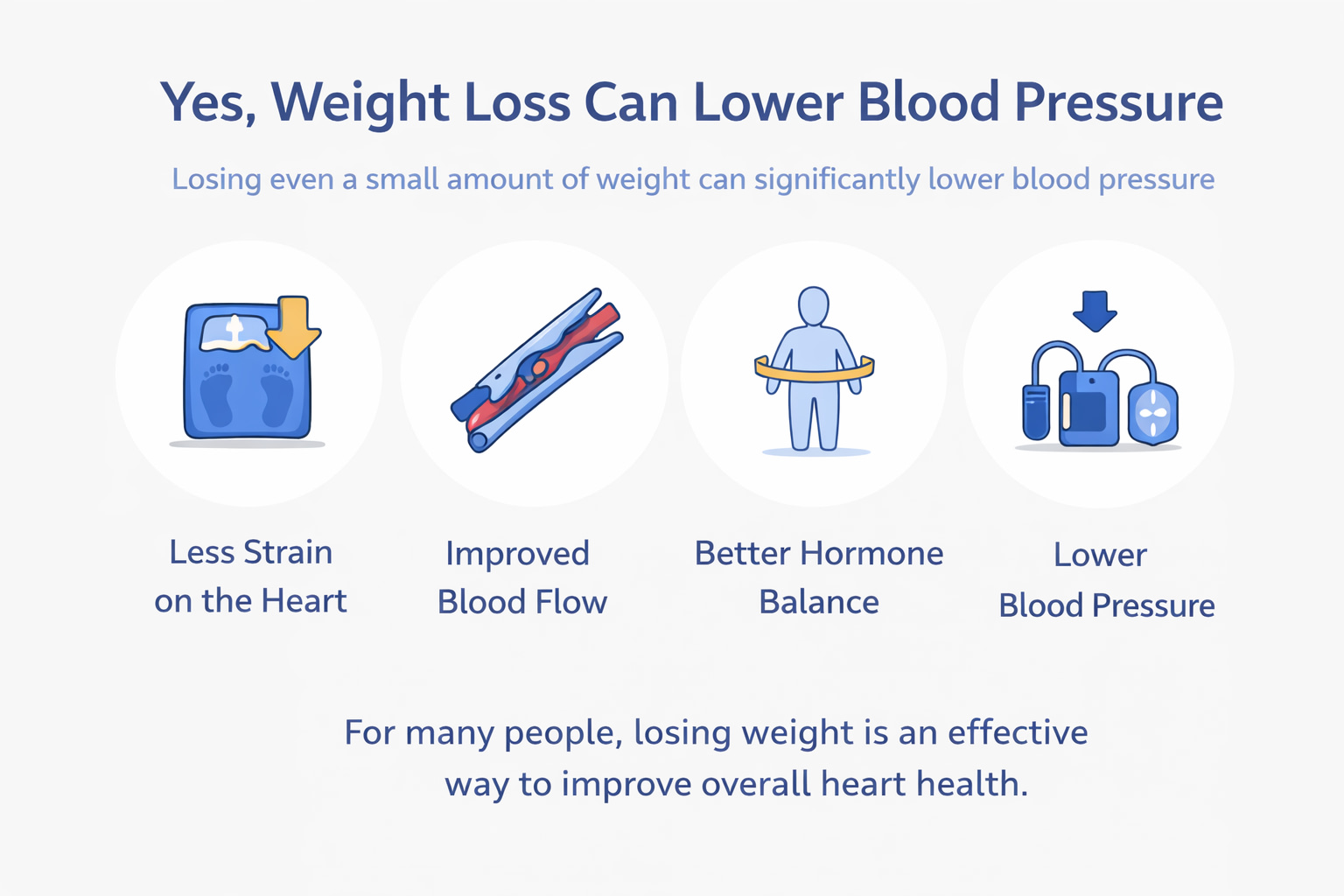
Yes—weight loss can significantly lower blood pressure, often reducing or even eliminating the need for medication in some people. Losing excess body weight reduces the strain on the heart, improves blood vessel function, and helps regulate hormones that control blood pressure.
This article explains how and why weight loss lowers blood pressure, how much weight matters, what science says, and what realistic results people can expect.
Understanding Blood Pressure (In Simple Terms)
Blood pressure is the force of blood pushing against the walls of your arteries. It’s measured using two numbers:
- Systolic pressure (top number): pressure when the heart beats
- Diastolic pressure (bottom number): pressure when the heart rests
Normal blood pressure is usually around 120/80 mmHg.
High blood pressure (hypertension) means the heart is working harder than it should, increasing the risk of:
- Heart disease
- Stroke
- Kidney disease
- Vision problems
Can Weight Loss Lower Blood Pressure? (Quick Answer)
Yes. Weight loss is one of the most effective non-medication ways to lower blood pressure. Even a small reduction in body weight—5 to 10 percent—can lead to measurable improvements in both systolic and diastolic blood pressure.
This is why doctors often recommend weight management as a first-line strategy for people with high blood pressure.
Why Excess Weight Raises Blood Pressure
Understanding the connection helps explain why weight loss works.
1. Extra Weight Increases Heart Workload
When body weight increases, the heart must pump more blood to supply oxygen and nutrients. This extra workload raises pressure inside the arteries.
2. Fat Tissue Affects Hormones
Body fat, especially around the abdomen, releases hormones and inflammatory substances that:
- Narrow blood vessels
- Increase sodium retention
- Disrupt blood pressure regulation
3. Insulin Resistance and Blood Pressure
Excess weight often leads to insulin resistance, which:
- Raises blood sugar
- Increases sodium retention
- Causes blood vessels to stiffen
All of these contribute to higher blood pressure.
How Weight Loss Lowers Blood Pressure

Weight loss reverses many of the factors that cause hypertension.
1. Reduced Pressure on Arteries
As body weight decreases, arteries experience less resistance, allowing blood to flow more easily.
2. Improved Blood Vessel Function
Weight loss improves the flexibility of blood vessels, helping them expand and contract properly.
3. Better Hormonal Balance
Losing fat reduces harmful hormone production and inflammation, restoring healthier blood pressure control.
4. Lower Sodium Sensitivity
Many overweight individuals are salt-sensitive. Weight loss helps the body handle sodium more efficiently, reducing fluid retention.
How Much Weight Loss Is Needed to Lower Blood Pressure?
One of the most encouraging facts is that you don’t need massive weight loss to see benefits.
Research shows:
- Losing 5% of body weight can lower systolic blood pressure by 5–10 mmHg
- Losing 10% or more can produce even greater reductions
For example:
- A person weighing 200 lbs who loses 10–20 lbs may see meaningful blood pressure improvements.
Weight Loss vs Blood Pressure Medication
Weight loss does not always replace medication—but it can reduce dependence on it.
In Some People, Weight Loss Can:
- Lower required medication dosage
- Improve medication effectiveness
- Delay the need for medication
- In mild cases, eliminate the need entirely
However, medication decisions should always be made with a healthcare professional.
Does Where You Lose Weight Matter?
Yes—abdominal fat (belly fat) has the strongest link to high blood pressure.
Reducing waist circumference:
- Improves insulin sensitivity
- Lowers inflammation
- Reduces strain on the heart
This is why lifestyle changes targeting overall fat loss are more effective than spot-reduction strategies.
Best Weight Loss Approaches for Lowering Blood Pressure
Not all weight loss methods affect blood pressure equally. Sustainable approaches work best.
1. Healthy Calorie Reduction
Gradual calorie reduction leads to steady weight loss without stressing the body.
Crash diets may:
- Raise stress hormones
- Cause blood pressure fluctuations
Slow, consistent weight loss is safer and more effective.
2. Balanced Nutrition
Diets rich in:
- Fruits
- Vegetables
- Whole grains
- Lean proteins
are associated with lower blood pressure, even before major weight loss occurs.
3. Physical Activity
Exercise helps lower blood pressure directly and indirectly by supporting weight loss.
Effective activities include:
- Walking
- Cycling
- Swimming
- Strength training
Consistency matters more than intensity.
4. Reduced Sodium Intake
Weight loss combined with lower sodium intake amplifies blood pressure reduction.
Processed foods are the biggest contributors to excess sodium.
How Long Does It Take to See Blood Pressure Improvements?
Blood pressure often responds faster than people expect.
Typical timeline:
- 2–4 weeks: small improvements may appear
- 1–3 months: noticeable reductions
- 6 months: significant, stable improvement
Even before reaching a goal weight, blood pressure can improve.
Can Weight Loss Prevent High Blood Pressure?
Yes. Maintaining a healthy weight is one of the strongest protective factors against developing hypertension.
People who maintain a healthy weight are:
- Less likely to develop high blood pressure
- Less likely to require medication later in life
- At lower risk for heart disease and stroke
Prevention is often easier than treatment.
Weight Loss and Other Heart Health Benefits
Lower blood pressure is only one benefit.
Weight loss also:
- Improves cholesterol levels
- Reduces risk of type 2 diabetes
- Lowers inflammation
- Improves heart efficiency
- Enhances energy and mobility
These benefits work together to protect long-term cardiovascular health.
Common Myths About Weight Loss and Blood Pressure
Myth 1: Only Large Weight Loss Matters
False. Even small weight loss has measurable benefits.

Myth 2: Thin People Can’t Have High Blood Pressure
False. Genetics, stress, and lifestyle also play roles.
Myth 3: Medication Is Always Required
Not always. Lifestyle changes can significantly reduce blood pressure, especially in early stages.
Who Benefits the Most from Weight Loss?
Weight loss is especially effective for:
- People with overweight or obesity
- Individuals with early-stage hypertension
- Those with insulin resistance
- People with family history of high blood pressure
However, benefits can occur at any age.
Is Weight Loss Enough on Its Own?
Weight loss is powerful—but works best when combined with:
- Regular physical activity
- Stress management
- Adequate sleep
- Healthy nutrition
Blood pressure is influenced by multiple factors, and a holistic approach produces the best results.
When to Seek Medical Guidance
Weight loss should be part of a broader health plan. Medical guidance is important if:
- Blood pressure is very high
- Symptoms such as dizziness occur
- Medications are being adjusted
Never stop medication without professional advice.
Final Thoughts: Can Weight Loss Lower Blood Pressure?
Can weight loss lower blood pressure? Absolutely. Weight loss is one of the most effective, natural, and sustainable ways to reduce blood pressure and improve overall heart health. Even modest weight reduction can lead to meaningful improvements, often within weeks.
Rather than focusing on rapid results, long-term success comes from consistent, healthy habits. Weight loss doesn’t just lower numbers on a blood pressure monitor—it reduces strain on the heart, improves vascular health, and lowers the risk of serious disease.
For many people, losing weight is not just about appearance—it’s a powerful step toward a healthier, longer life.